
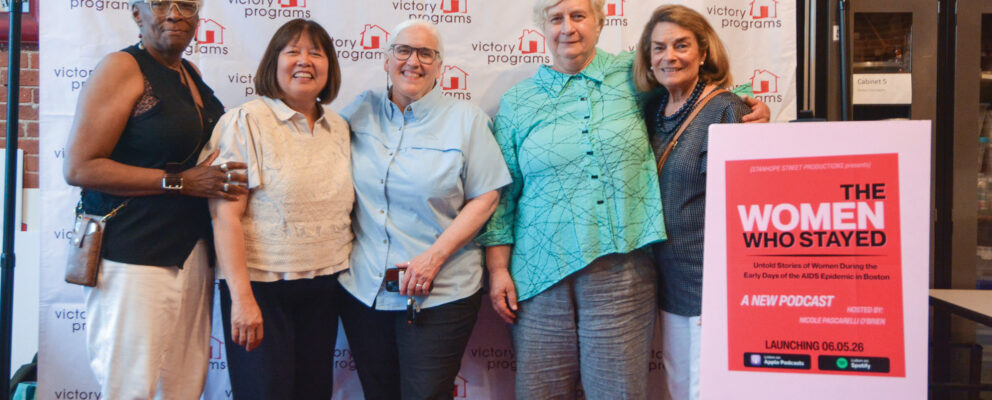
How the pioneers of peer-led care and “The Women Who Stayed” podcast continue to guide Victory Programs at 29 Stanhope Street.
The Roots of the BLC & The Women Who Stayed
In 1988, amidst the height of the HIV/AIDS epidemic, a group of peers working on the New England chapter of the AIDS Memorial Quilt (The Names Project) began meeting to share meals, offer mutual support, and lean on one another. Out of those simple gatherings, the Boston Living Center (BLC) was born—a peer-led sanctuary where people living with HIV could live fully, free from shame, judgment, and isolation.
To ensure those closest to the pain remained the authors of their own healing, the BLC’s original by-laws mandated that at least 51% of its Board of Directors be HIV-positive—a radical, defiant act of self-determination in an era when society treated the virus with fear and hostility.
To capture and honor this extraordinary history, the multi-episode podcast The Women Who Stayed, hosted by Nicole Pascarelli O’Brien, documents the untold stories of the activists, caregivers, nurses, and friends whose essential contributions held the line during Boston’s AIDS crisis. By centering the women who stepped up when others turned away, the podcast bridges generations of advocacy and ensures these unsung heroes are never forgotten.
Leah Camhi: Building the Physical Sanctuary
When Leah Camhi became the Boston Living Center’s first Executive Director in 1992, she encountered an organization operating out of a dark, neglected seventh-floor office at the Clarendon Street YWCA. Despite serving hundreds of members with a meager $250,000 budget, Leah refused to accept that a space for people living with HIV had to feel hidden or depressing.
Under Leah’s leadership, the BLC launched capital campaigns to merge three buildings at 29 Stanhope Street in 1995, creating a breathtaking 20,000-square-foot community haven. Every detail was designed to restore dignity:
- Dignity at the Table: Leah insisted meals be served on real glass plates with metal silverware—rejecting the subtle clinical signal that members were “untouchable” at a time when fear dictated disposable paper cups and plasticware elsewhere.
- Aesthetic Privacy: South End artist Jim Anderson designed an etched glass logo window for the front entrance, providing visual beauty while offering privacy for members walking through the doors.
- Peer Leadership in Hiring: Leah required that at least half of the staff and board be living with HIV. She sought out unconventional leaders based on passion over credentials—hiring Alfredo Hernandez, an architect from Mexico with broken English, to run the front desk, and Mike Bacon, who famously slammed his fist on the interview table in a food-patterned tie declaring, “This is my job!”
- Unapologetic Advocacy: Leah routinely confronted municipal and state public health officials to demand unutilized rollover funds, expanding the budget to $2.5 million and subletting space to 15 partner agencies to create a low-barrier one-stop shop.
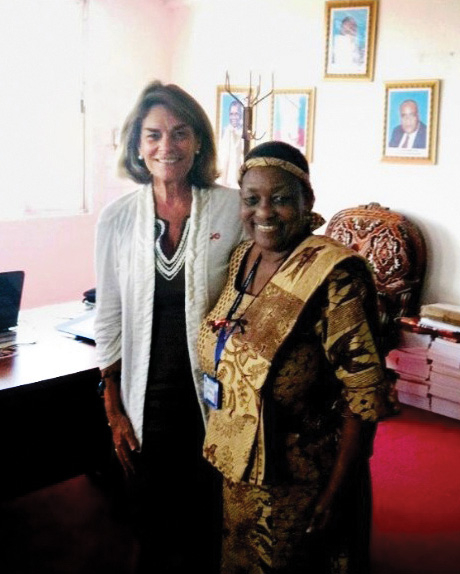
Nurse Pat Daoust: Establishing the Clinical Moral Compass
Where Leah built physical sanctuary, nurse Pat Daoust established the BLC’s clinical moral compass. Pat’s journey began in 1985 with a profound act of professional defiance: she walked out of her hospice coordinator job when management refused to admit a terminally ill young man with AIDS.
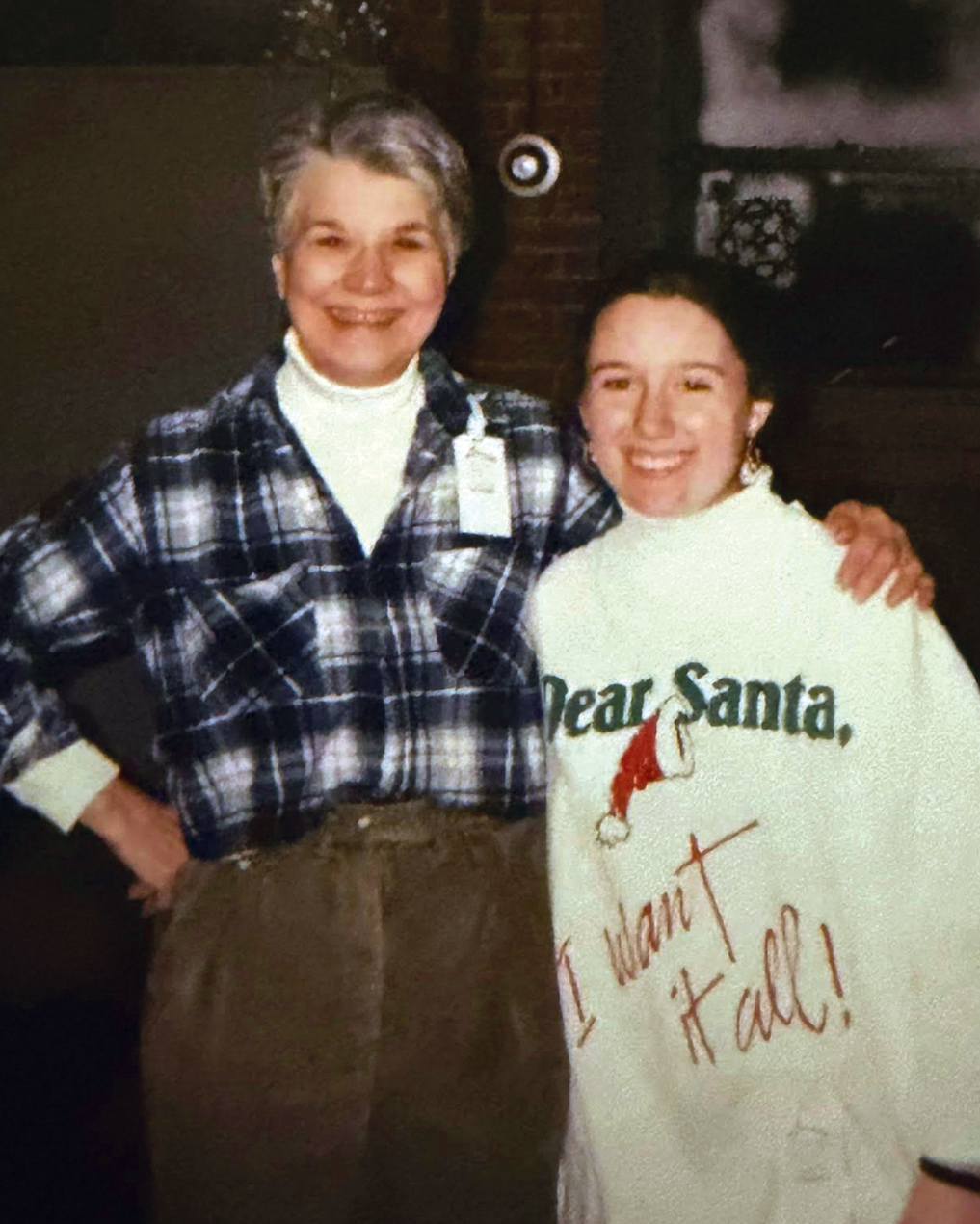
Refusing to accept discrimination, Pat joined the AIDS Action Committee as Director of Client Services. During her impactful tenure alongside co-founder Larry Kessler, Pat helped establish foundational standards for HIV care across Massachusetts—advocating for client dignity long before effective treatment protocols existed and driving across the state to teach “universal precautions” in hospitals, parish communities, and prisons like Bridgewater State Hospital.
Pat later served on the Board of Directors at the Boston Living Center, finding deep solace in direct community engagement. Reflecting on her time at Stanhope Street, Pat shared:
“Helping serve meals, simply talking with clients, and realizing the significant impact of a welcoming place to eat, gather, and belong brought such a feeling of peace and solidarity. It was a truly special organization then and now.”
Pat took these hard-won lessons of low-barrier care, equity, and human rights to a global scale, spending over two decades training healthcare workers and designing continuous HIV responses across East Africa under PEPFAR and Physicians for Human Rights.
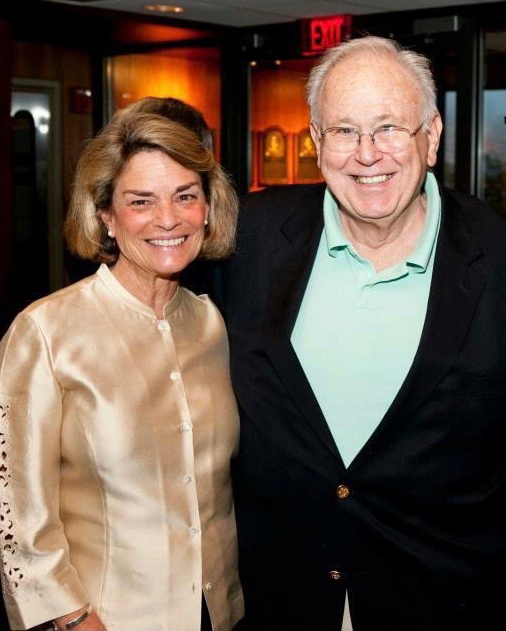
Nicole Pascarelli O’Brien: The Generational Bridge & Podcast Host
Passing that torch to the next generation, Nicole Pascarelli O’Brien entered the BLC in the summer of 1993 as a 17-year-old volunteer from an all-girls Catholic high school.
Anxious one evening after spending the dinner hour talking with members instead of clearing tables, Nicole apologized to dining room supervisor Lorraine Doherty and kitchen manager Michael Bacon. They stopped her and offered a lesson that defined her life:
“Calm down. The most important thing you can do is be present for someone, to sit and listen. Anyone can clean up, but what you’re doing is more important.”
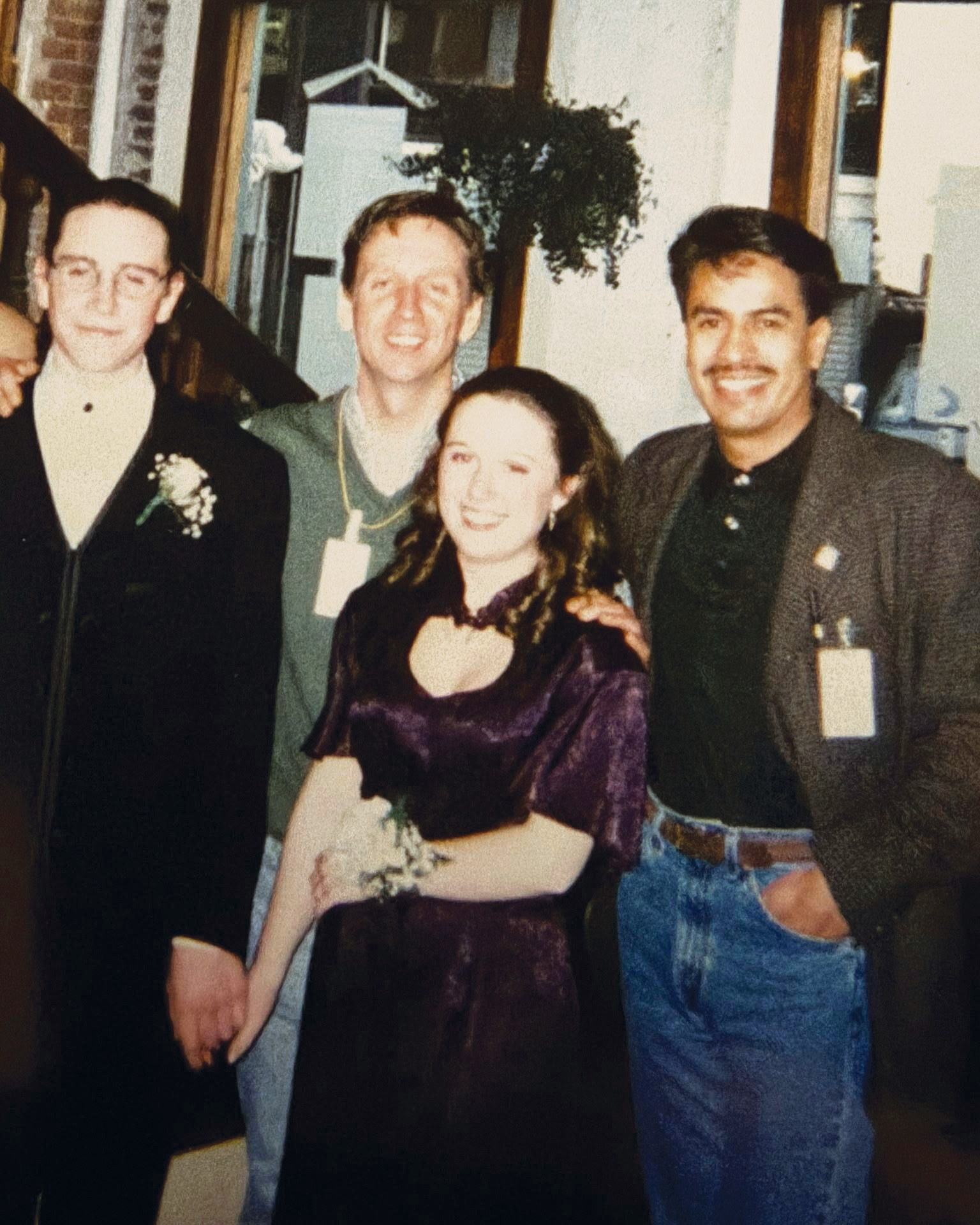
Lorraine told Nicole she didn’t care if she ever cleaned a dish again if she was spending that time connecting with members. That lesson in active presence shaped Nicole’s worldview. BLC members became deeply invested in her life—asking about her classes, her boyfriend, and her college plans. On her prom night, volunteer director Jim Greene, Alfredo Hernandez, and members stayed late at the office just to see her in her prom dress. Decades later, Nicole married that same high school boyfriend, Chris.
Today, Nicole serves at Saint Cecilia’s Parish in Boston (which proudly displays the AIDS Memorial Quilt every December 1st) and hosts The Women Who Stayed podcast. Through her interviews with pioneers like Leah Camhi and Pat Daoust, Nicole ensures that the wisdom, trauma, and defiant joy of the AIDS epidemic are passed down to educate young people today.
Aron Thiim & The BLC Today at 29 Stanhope Street
In 2012, the Boston Living Center merged with Victory Programs, securing its long-term financial foundation while honoring its peer-led roots. Today, 29 Stanhope Street welcomes 150 to 200 members daily, serving over 4,700 individuals annually across its nutrition, harm reduction, and peer support programs.
Building on the success of its founding model, Victory Programs expanded services at Stanhope Street beyond HIV support—offering hot meals, food pantry packages, peer recovery groups, and wellness activities to neighbors navigating food insecurity, active substance use, and chronic homelessness. The facility also houses VPI’s Community-Based Housing team (including Keys to Home), connecting visitors directly to rental assistance, case management, and tenancy preservation resources under one roof.
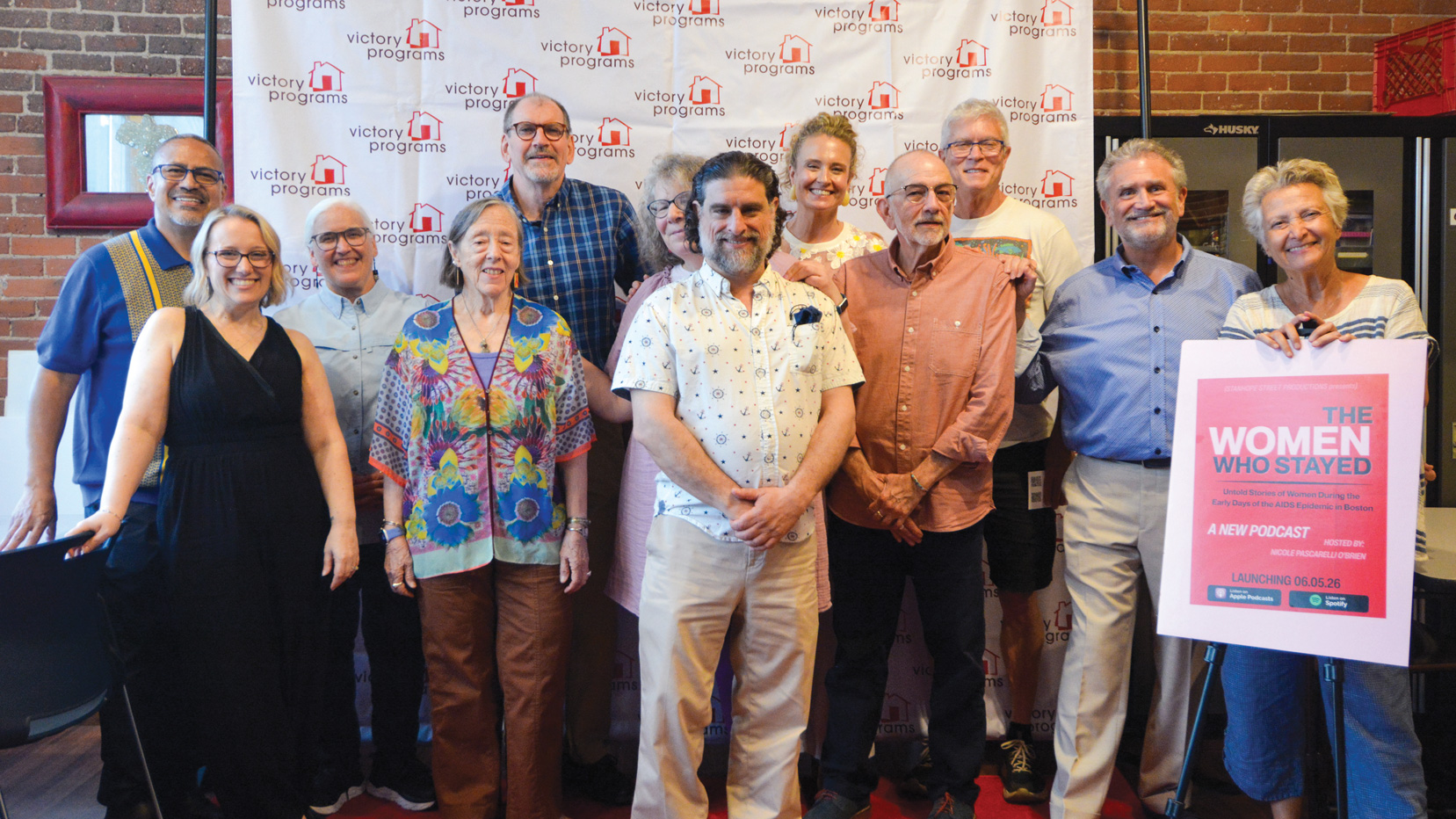
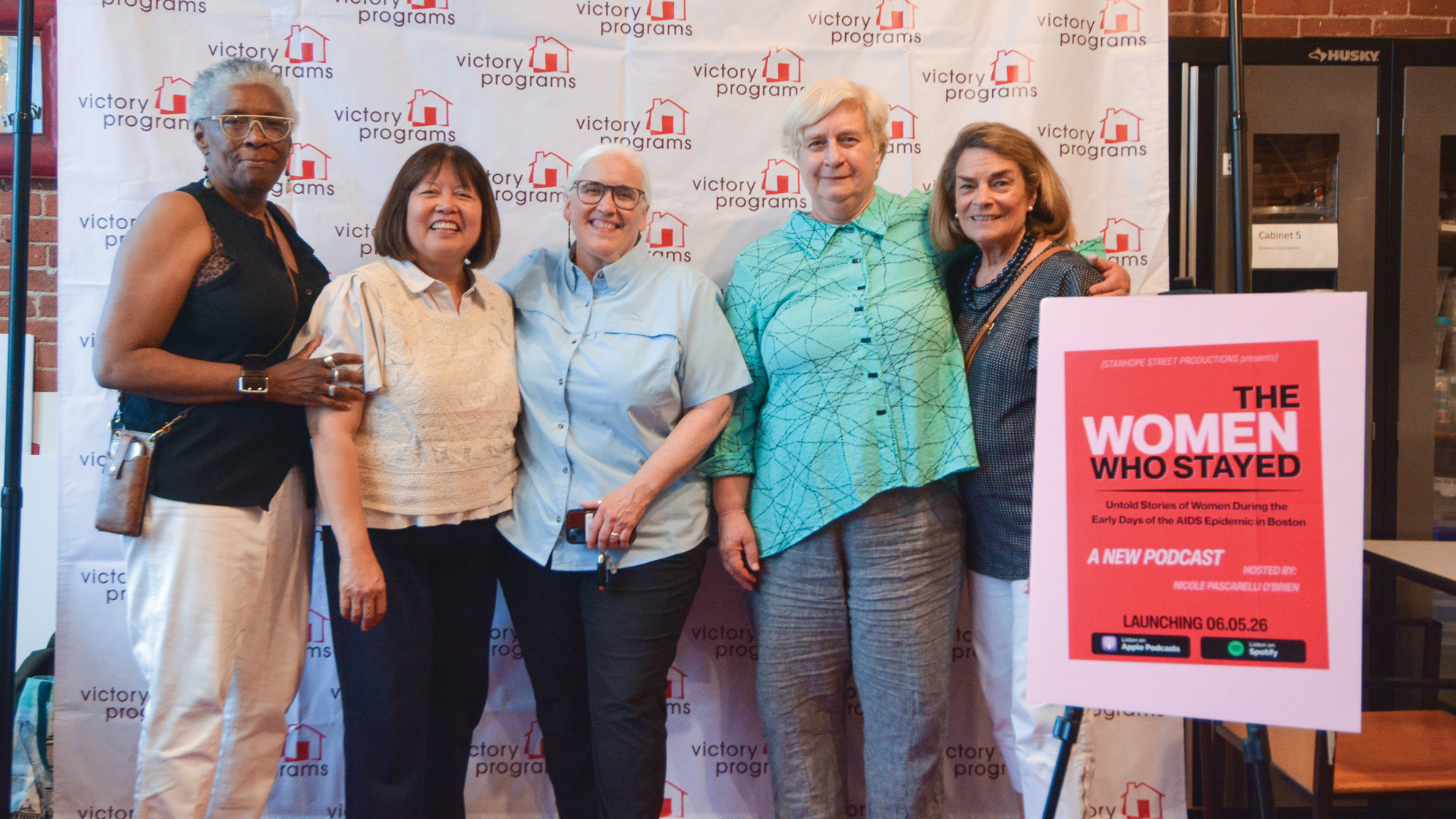
The enduring strength of this network was on full display at the launch of The Women Who Stayed podcast, where pioneers like Leah Camhi, Michael Bacon, Alfredo Hernandez, and dozens of longtime advocates reconnected—proving that the bonds formed in those early days at Stanhope Street remain unbroken today.
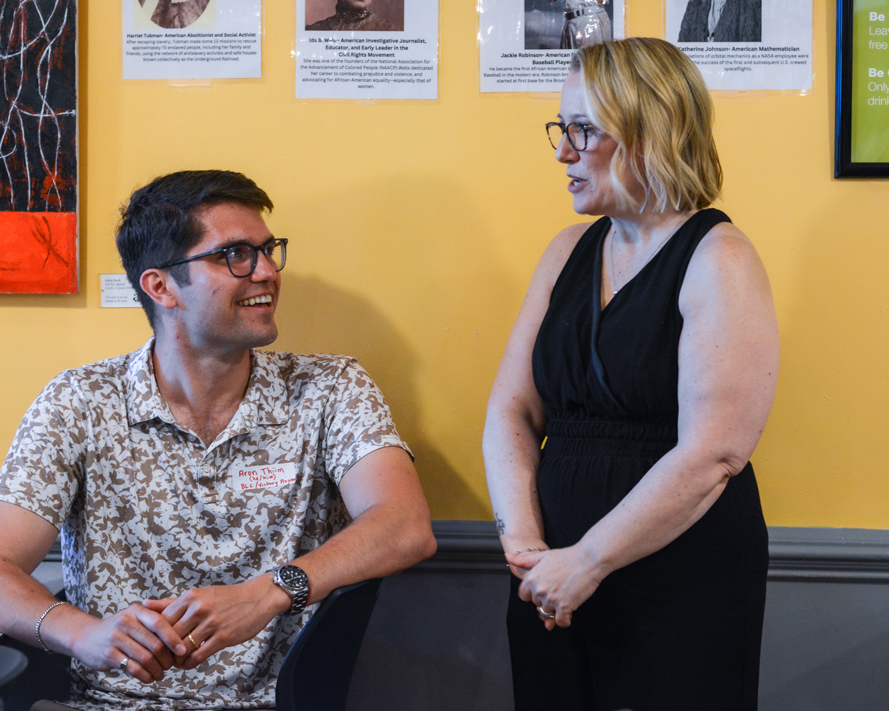
Current BLC Program Director Aron Thiim sees this daily commitment as a direct continuation of the Center’s founding spirit.
For Aron, a hot meal remains the ultimate entry point for comprehensive care. While lunch brings people through the doors, staff are right beside them to help navigate housing, healthcare, and prevention services. “The meal brings people in,” Aron explains, “but the relationships built around it are what make so much else possible.”
That sense of community extends to peer leadership, where member feedback actively shapes program adaptations, as well as neighborhood engagement. Through local park cleanups and open communication with nearby residents and businesses, the BLC works to break down external stigma while holding its community to high standards of mutual respect.
The true impact of 29 Stanhope Street, however, is best witnessed across the dining room tables. Aron recalls pausing recently at a table shared by decades-long members and a newcomer who joined this summer—people from vastly different backgrounds talking and laughing together.
“There was something powerful in watching people whose lives might never otherwise intersect find familiarity and connection around the same table. That is part of what the BLC makes possible: not only access to services, but the relationships, trust, and sense of belonging that can help people move toward greater health and stability.”

Sustaining Sanctuary Today
Nearly four decades after a small group sat together to share a meal, the landscape of supportive care faces familiar systemic pressures:
-
Funding Scarcity: Shrinking federal HUD and CDC grant allocations continue to force providers to stretch scarce resources, putting immense pressure on low-barrier drop-in services and community meal programs.
-
Harm Reduction Restrictions: Recent SAMHSA policy updates explicitly ban federal grant funds from purchasing basic survival supplies like fentanyl test strips and sterile water.
In the face of these challenges, Victory Programs remains unwavering—asserting that dignified, compassionate community care and nutrition are fundamental human rights. By carrying forward the presence, dignity, and solidarity modeled by women like Leah, Pat, and Nicole, 29 Stanhope Street continues to serve as an open sanctuary where everyone finds a place to belong.